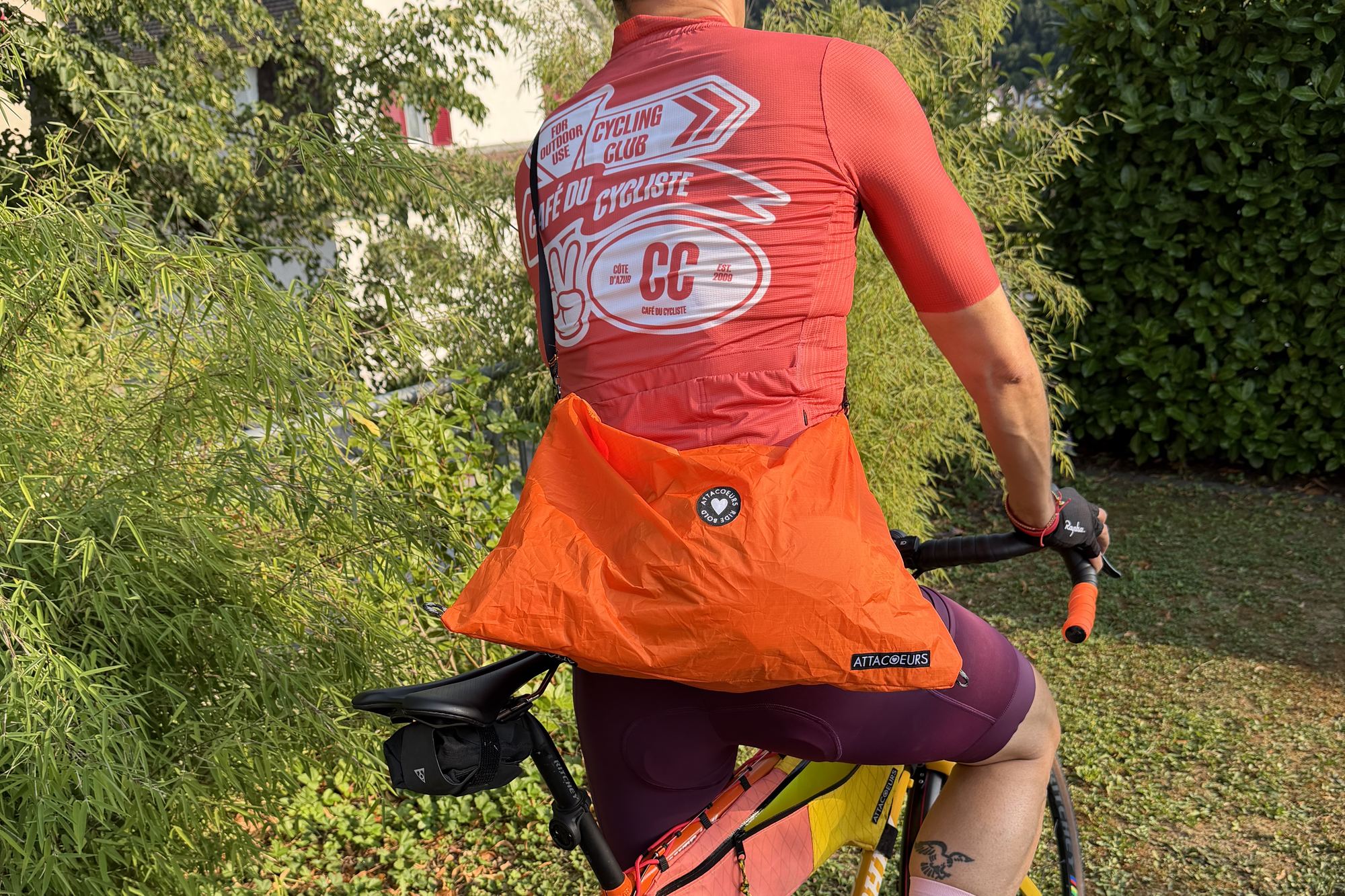
Projects · IN USE
Two bikes, four bags, nowhere to put dinner.
The alimentari in the village shuts at seven. We got there at ten to, and dinner turned out to be two litres of water, a kilo of peaches, bread, and a sausage the length of your forearm.
Then we stood in the doorway holding all of it. Frame bag: full, zipped, packed in an order that had taken twenty minutes to work out. Saddle pack: rolled and buckled shut. Handlebar roll: sleeping bag. Getting anything into any of them meant emptying it onto the pavement first.
The bags aren’t the problem. They do exactly what they were built to do — carry a week of kit through weather, without shifting, for eight hours a day. What none of them does is take one more thing at seven in the evening.
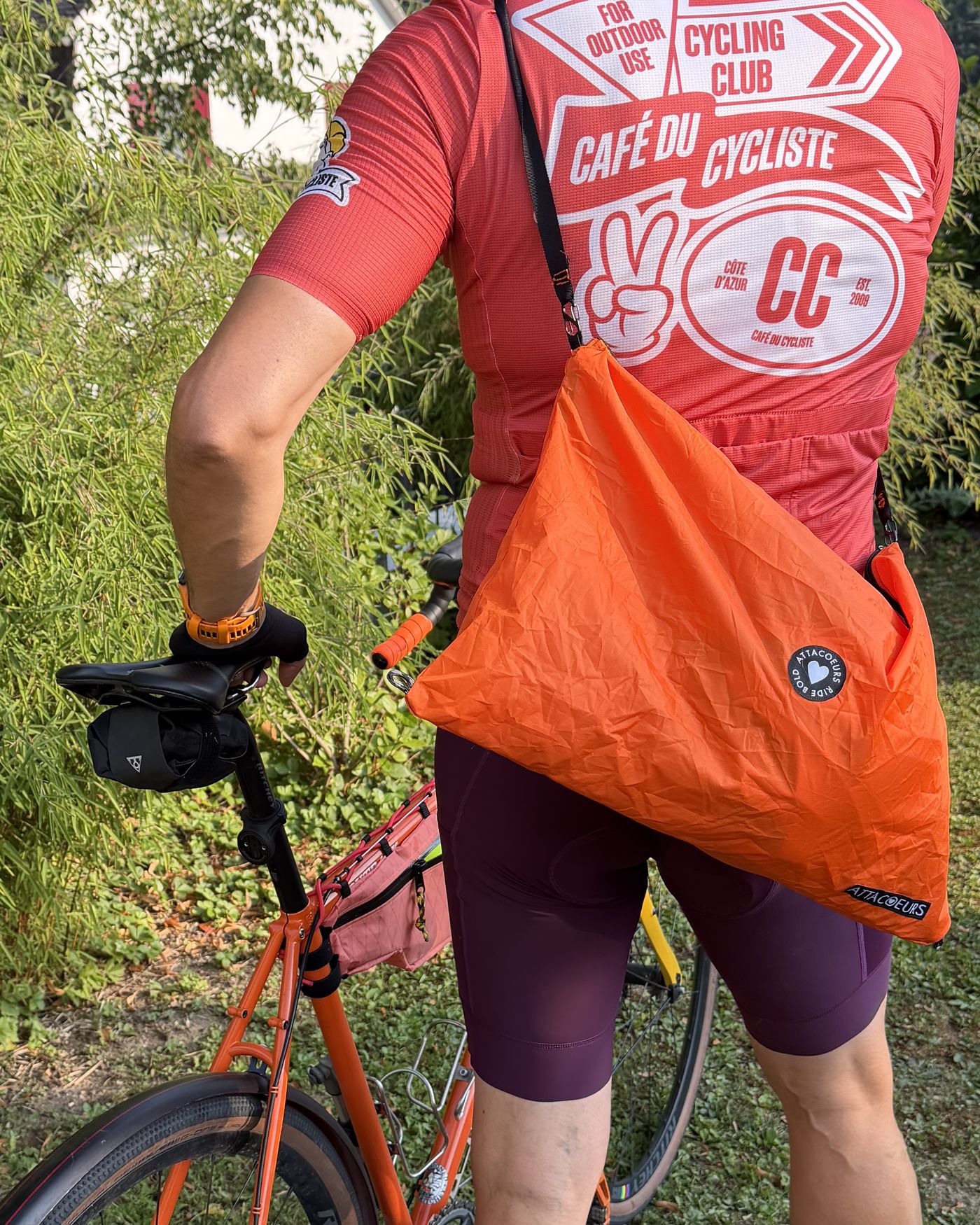
The peloton solved the carrying part a hundred years ago. A musette: cotton, long strap, handed up at the feed zone, thrown in a hedge at the end of the day.
Buy one, then. We looked. A race musette is three litres — a bidon and a rice cake — and it’s open at the top, which is fine at walking pace and useless on gravel. The packable ones are better made and still small: five to seven litres, and the seven‑litre one that closes does it with Velcro. Dinner for two doesn’t go in any of them. What we wanted didn’t exist: the volume of a shopping bag, the weight of the small ones, and a zip.
Two rules
Big enough that dinner for two goes in without thinking about it. Light enough that leaving it at home is never a decision. If you catch yourself weighing a bag before a ride, you built the wrong bag — so we set both first and worked backwards into the pattern.
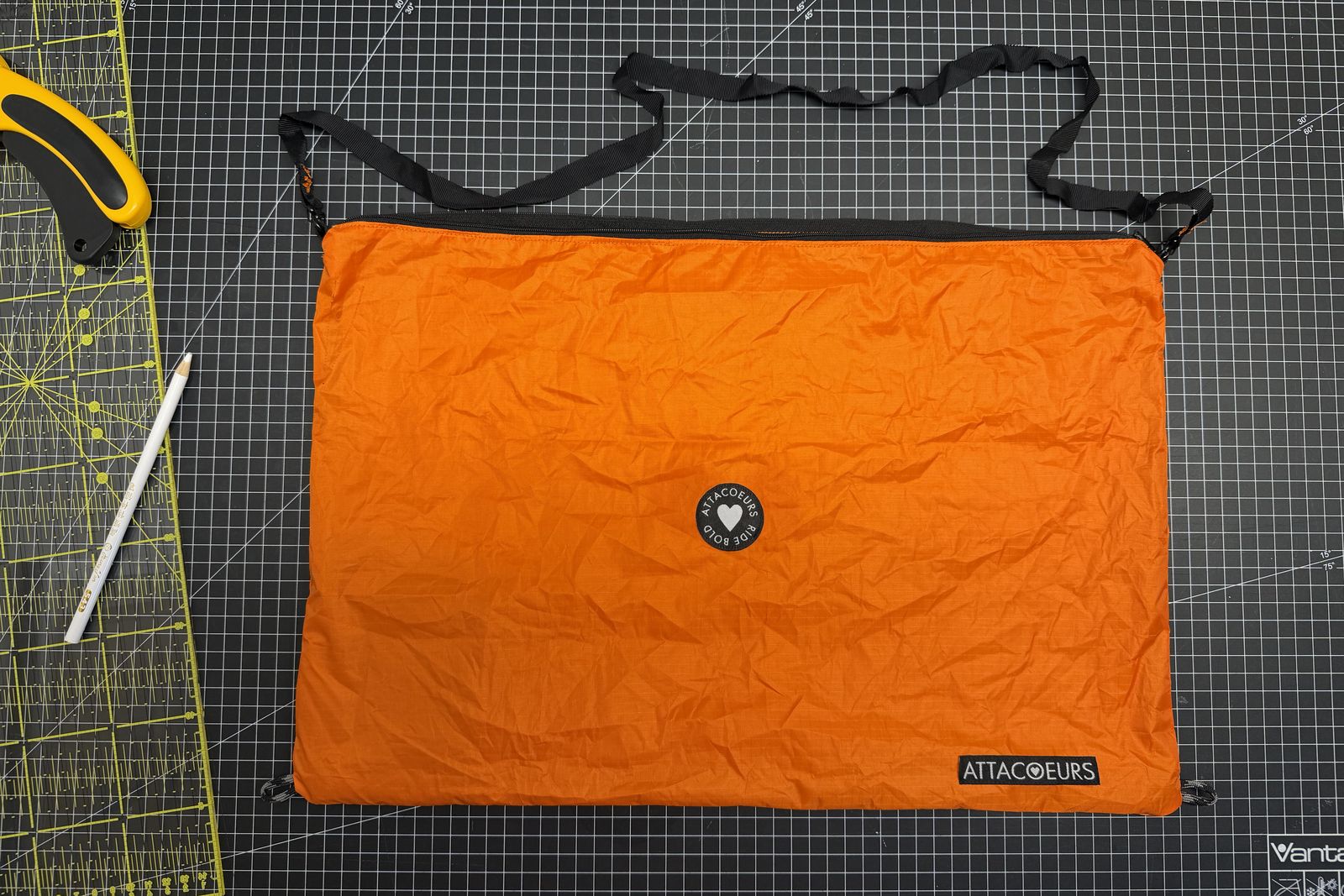
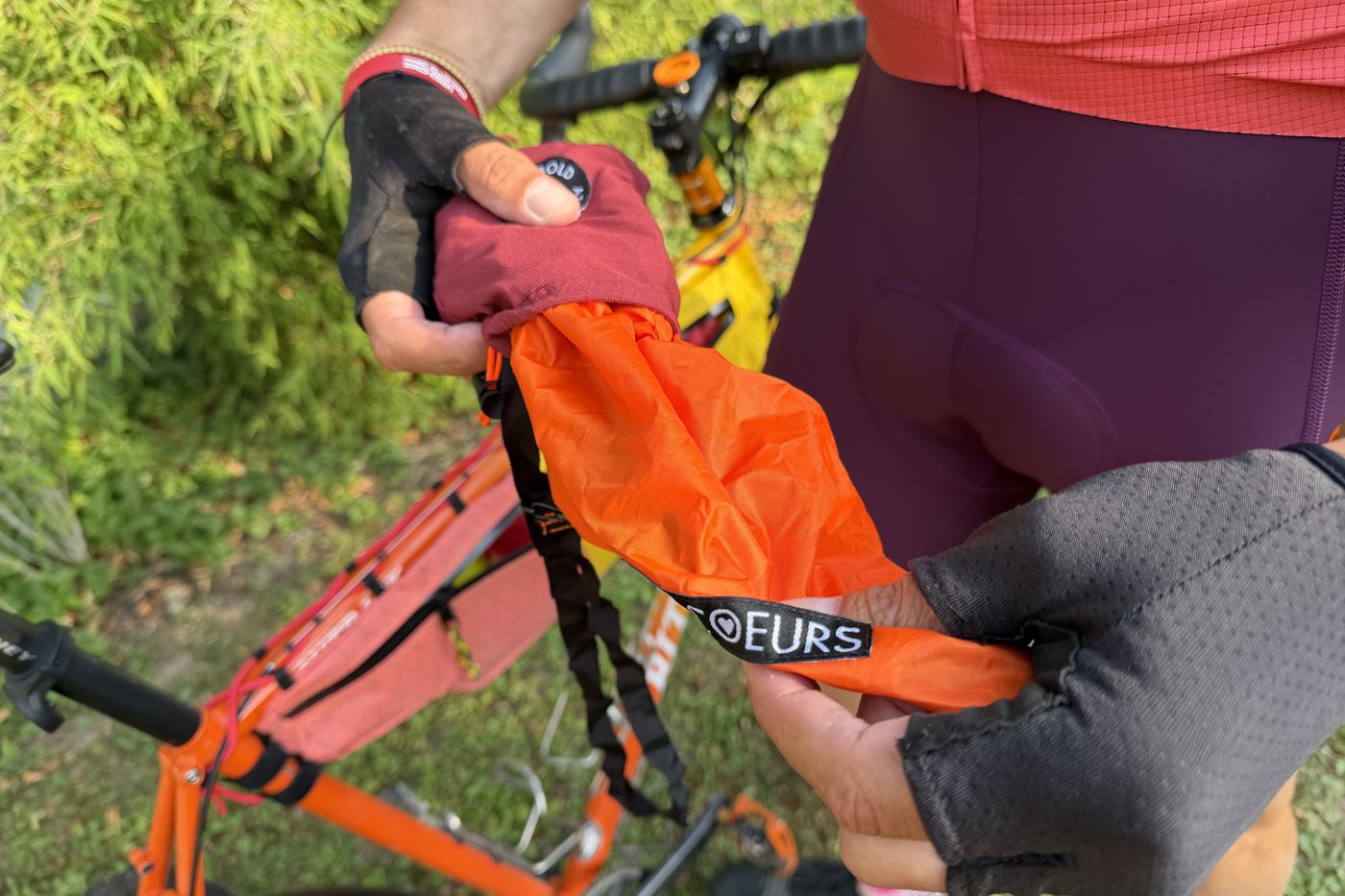
Ripstop nylon, one panel, folded and closed with a single zip down the long edge. One ladder‑lock on the strap — long for cross‑body, short so it rides high on your back and stops swinging on descents. The pouch is sewn in, so there’s no second bag to lose.
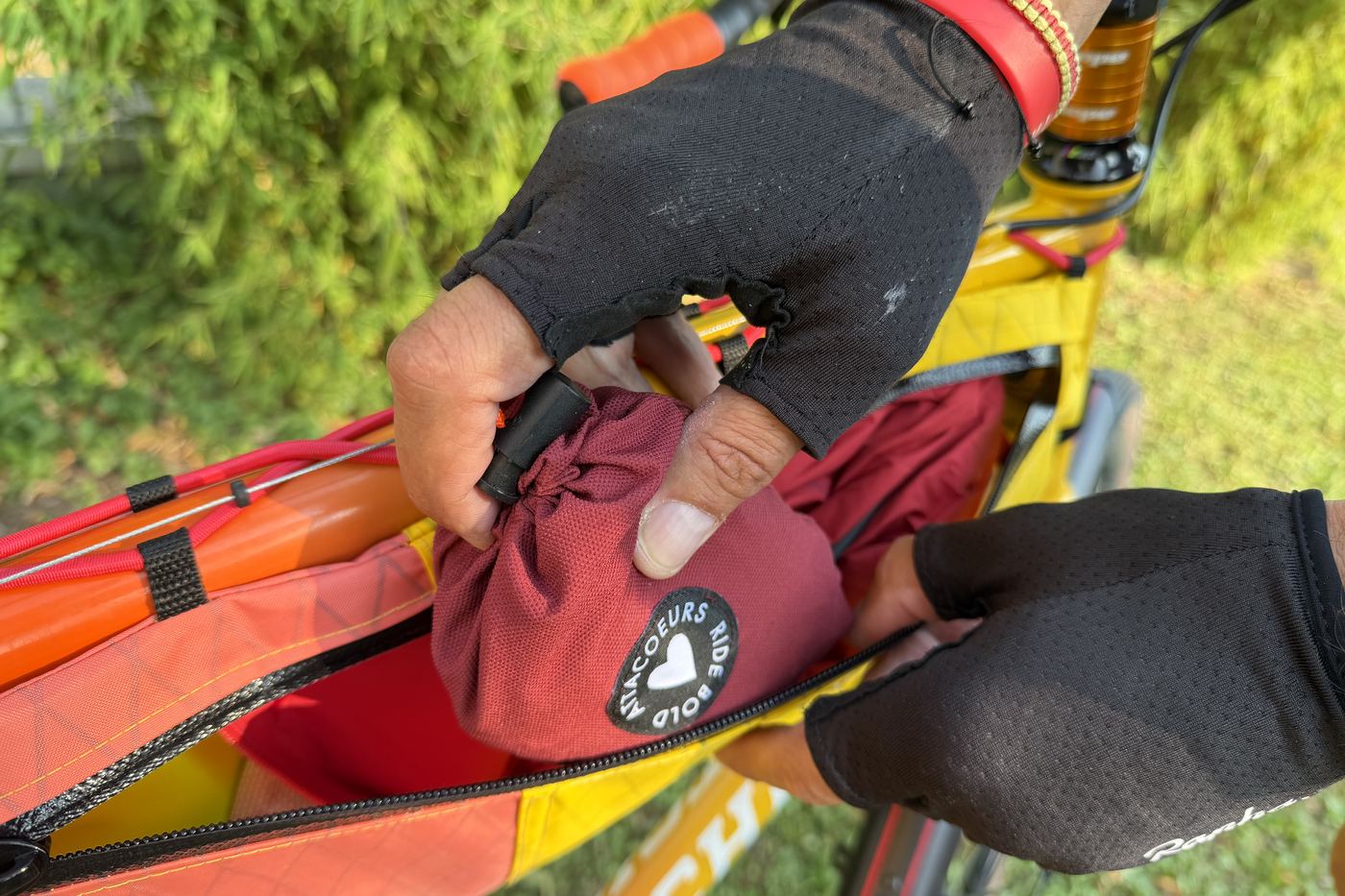
The bag you never decide about is the bag you always have.
Packed, it’s a fist. It lives in the frame bag next to the multitool and gets forgotten there for weeks at a time. Then the shop is closing in ten minutes and it takes four seconds.
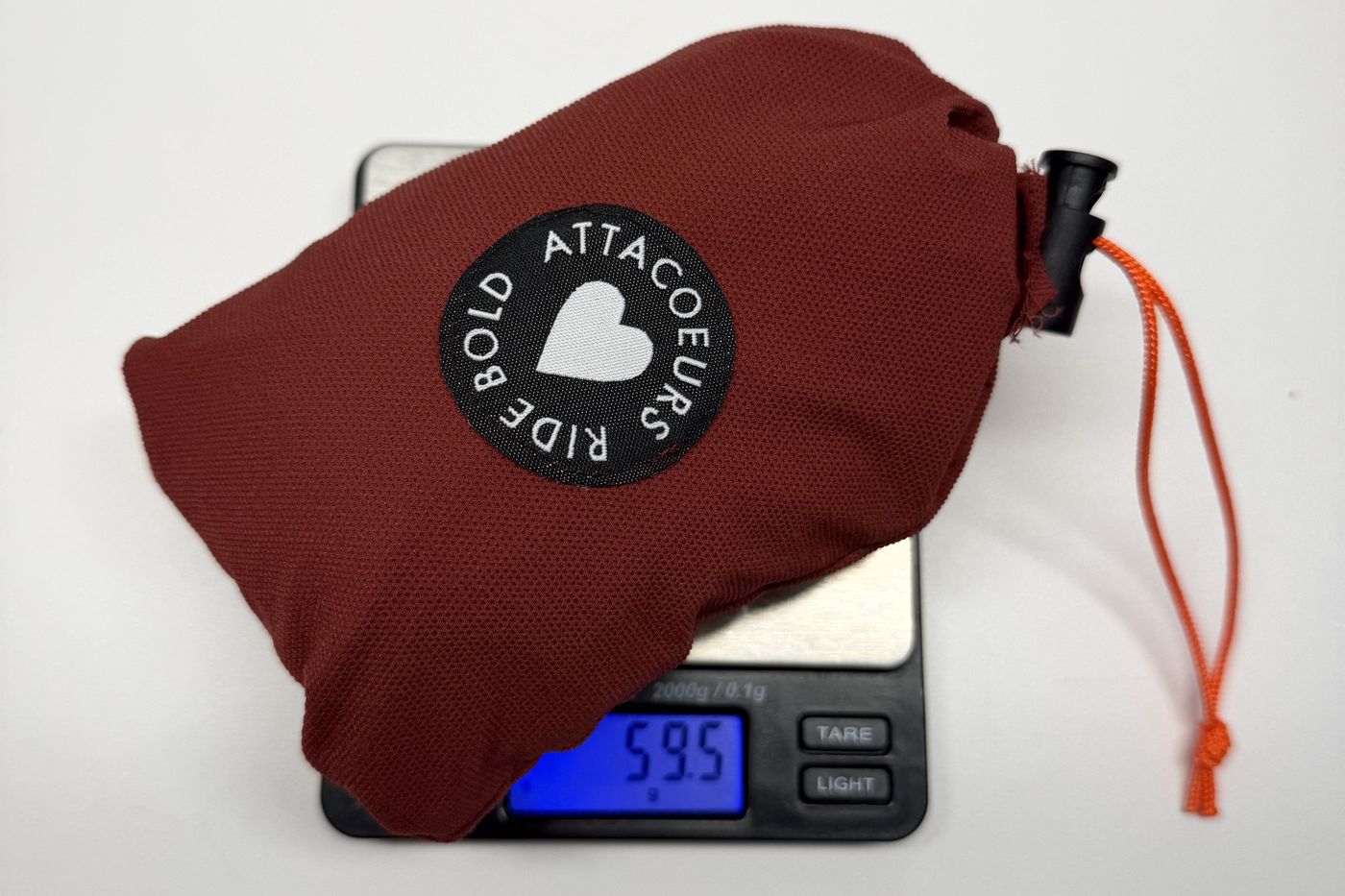
On the scale, packed, pouch included: 59.5 grams. The spare tube in the same frame bag weighs more than twice that.
Dinner: water, peaches, bread, a sausage. Or the bidons, the helmet, and whatever else shouldn’t stay on a bike parked outside. It isn’t a lighter bag. It’s one less decision.